Kate Lynn Lindsey
an assistant professor of linguistics
specializing in the documentation
and preservation of linguistic diversity
  • Home
  • CV & Publications
  • Research
  • Teaching
    • Recommendation Letters
  • Fieldwork & Language Communities
  • Academic & Travel News
  • Bio & Contact

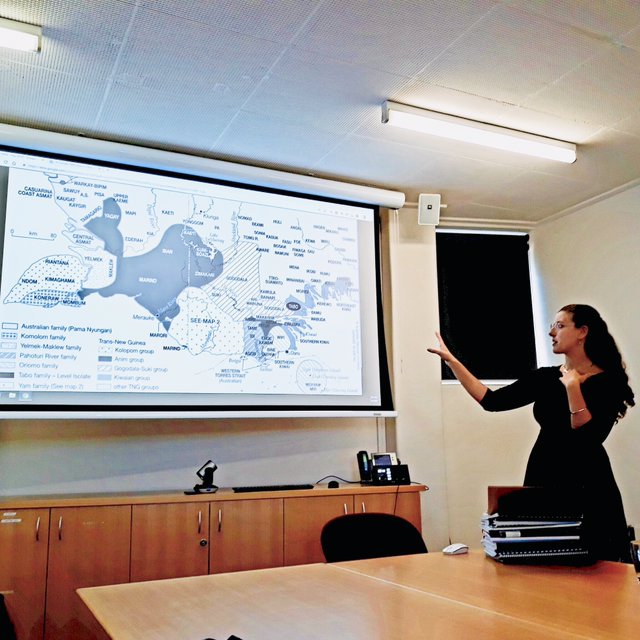
Invited Talk: Papua New Guinea, a proposal for collaboration @ Tertulia Junior Faculty Colloquia

10/16/2019

 
Picture
Program: Tertulia Junior Faculty Colloquia
Title: Papua New Guinea: A proposal for collaboration
Slides: here.
Papua New Guinea is a linguistic paradise boasting at least 850 diverse languages in an area the size of California. Though field linguists, anthropologists, and biologists have flocked to PNG for decades to explore its beauty, the southern region of the country is still relatively undocumented. In this talk, I will illuminate some fascinating aspects of language and life in Southern New Guinea, focusing on the area where Ende is spoken, the language about which I wrote my dissertation. I will show some photos, maps, and videos and try to convince some of you to collaborate with me in this exciting field.
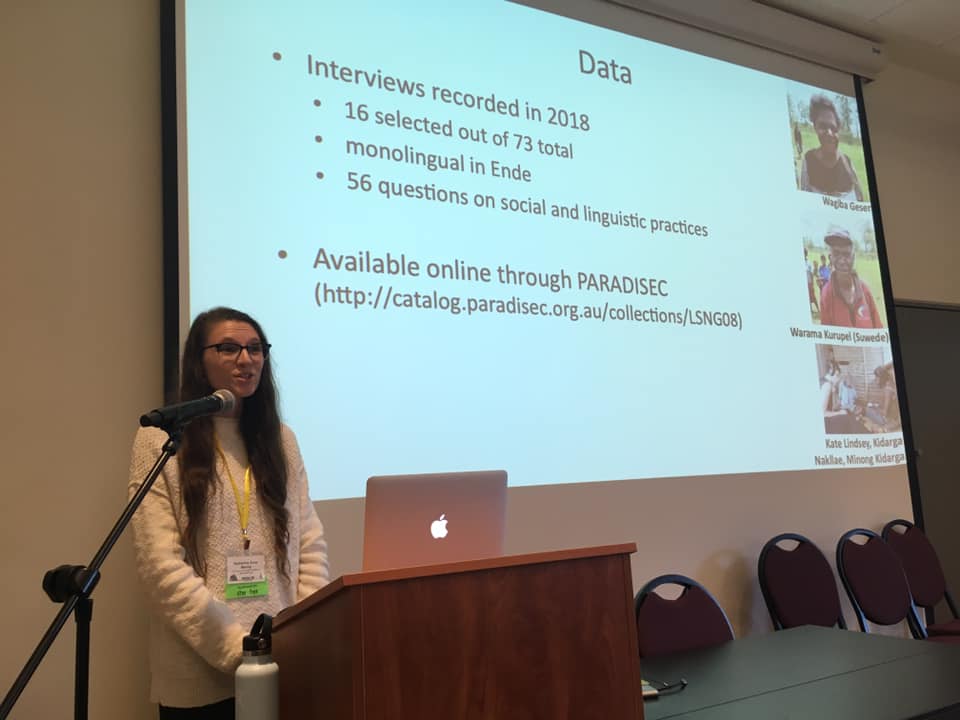

Talk: Linking prestige with power: Gender, oration, and variable affrication in Ende

10/11/2019

 
Picture
This talk was given by Katherine Strong (UHM) and represents collaborative research led by Strong and assisted by myself and Katie Drager (UHM).

Linking prestige with power: Gender, oration, and variable affrication in Ende


​Women tend to use standard variants more than men (Labov, 1990), possibly to access symbolic power when traditional avenues to power are unavailable (Eckert, 1989:256). We present results from a study examining variable affrication of retroflex obstruents (ʈ͡ʂ)~(ʈ) and (ɖ͡ʐ)~(ɖ) in Ende, a language spoken in Papua New Guinea. Despite no written standard, Ende speakers have strong opinions on what constitutes “good” Ende. Men, older speakers, and community orators hold positions of prestige. A variationist analysis of the speech of 16 Ende speakers demonstrates that the variable is more likely to be realized as a stop when produced by orators. Among the orators, older speakers and women are more likely to produce tokens as stops compared with younger speakers and men. We argue both that the observed patterns arise because the stopped variants are linked with power and that women orators use the variants to assert symbolic power.

Conference Workshop: Variation off the beaten track @ NWAV

10/10/2019

 
Picture
with Danielle Barth, Dineke Schokkin, James Stanford, and Catherine Travis
Google Group: here.
Workshop slides: here.

Variation off the beaten track: Expanding our understanding of social structures
In recent years, there has been an increased interest in the intersection of documentary linguistics and sociolinguistics. This means that more and more sociolinguistic work is being done with non-Western communities, and more documentary linguists are incorporating variation and sociolinguistic patterning into their grammar writing and documentation. In this workshop, we share our experiences of analyzing linguistic variation in under-documented languages, while trying to understand the effects of social structures both familiar and unfamiliar in Western communities as they play out in surprising ways. We present case studies from Papua New Guinea, China, and Vanuatu. How can we understand an under-studied social variable such as clan and how it interacts with community contact, alliances, social networks, and obligations? How might we reconceptualize age as a variable, which may have differing meaningful divisions from culture to culture, and may vary in the role it plays in innovation and diffusion? We discuss some specific problems we have faced, which are not necessarily exclusive to those working in “exotic” locations, such as: difficulties in interpreting variation due to lack of anthropological and ethnographic background, data sparsity, the transcription bottleneck, unbalanced sampling, and challenges in reconciling variation and abstraction in describing linguistic structures. This workshop is aimed at both documentary linguists who are interested in looking at sociolinguistic variation in the languages they are working with, and at sociolinguists who have encountered similar issues in their own research. We present some of our solutions and will have a portion of the workshop dedicated to discussion with workshop participants for sharing their ideas and experience.

Invited talk: Exploring phonetic variation and change in understudied languages @ Uni Melbourne

7/8/2019

 
Picture
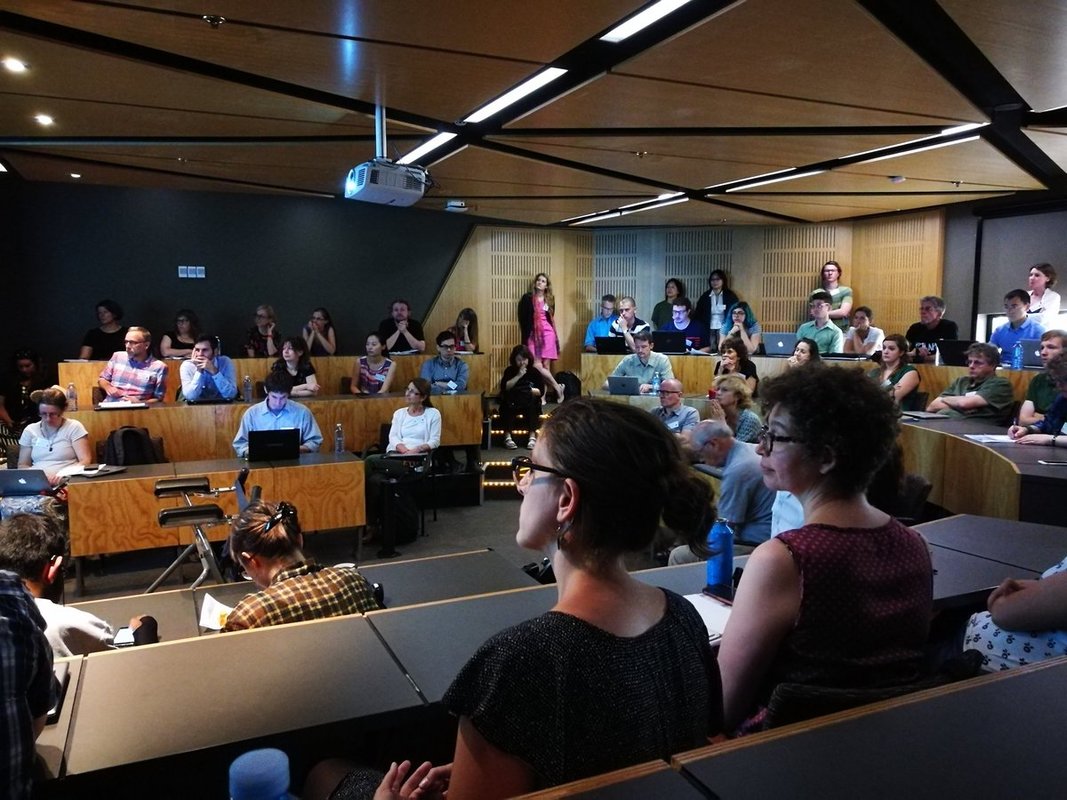
I had a blast chatting with the linguists at University of Melbourne about identifying and analyzing variation in minority languages while showcasing exciting work on Ende by Katherine Strong and Christian Brickhouse! It's so enriching having other people look at Ende data with their own expertise and curiosity.
Slides and slide notes

Talk: Reconstructing liquids in proto-Pahoturi River @ ICHL

7/1/2019

 
Picture
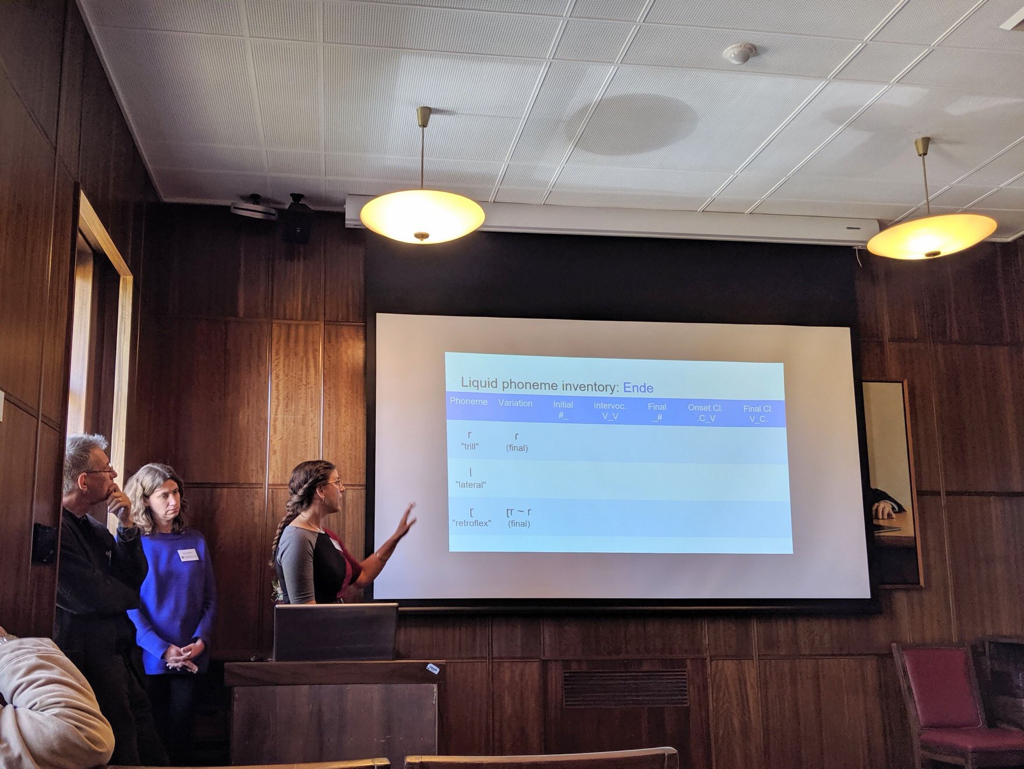
Nick Evans, Dineke Schokkin, and I presented our work in reconstructing the phoneme inventory of proto-Pahoturi River. This presentation focused on the reconstruction of the liquids. Although there are at most three liquids in each PR language, there are five distinct correspondence sets across the family.
Slides

Dissertation defense: Ghost elements in Ende phonology

5/21/2019

 
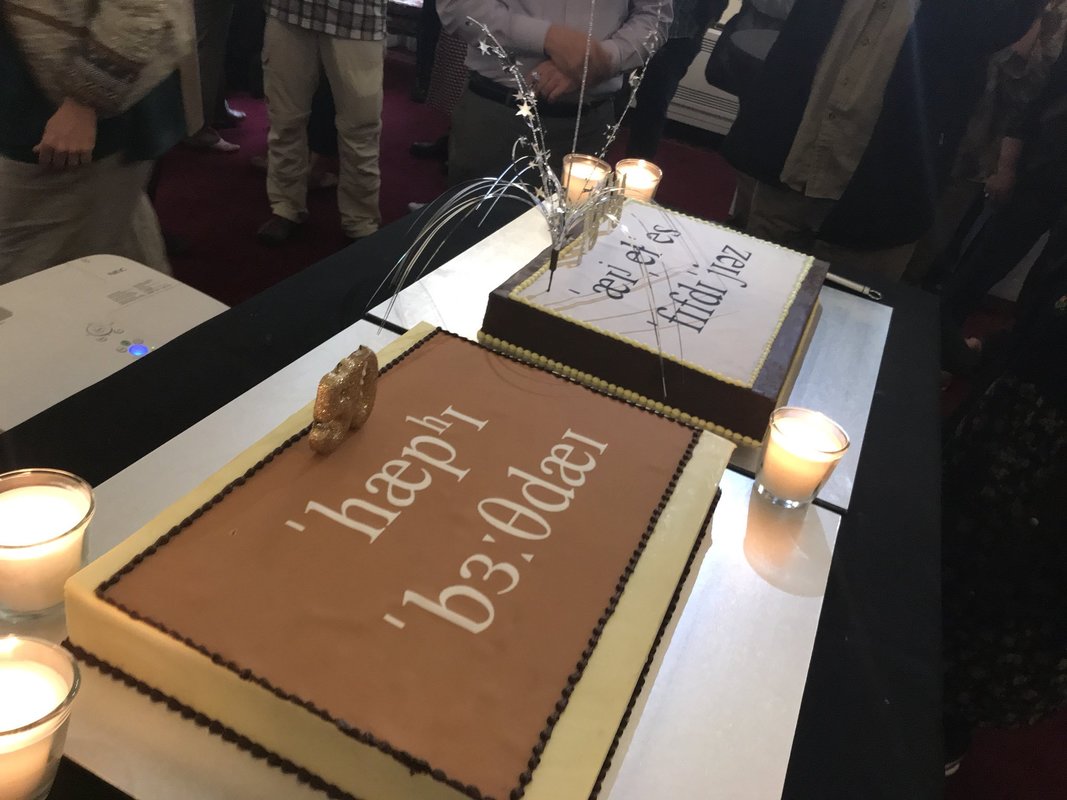
What a thrill to defend my dissertation in front of so many of my advisors, friends, and family!

​Abstract:
In this work, I expand Zoll’s (1996) analysis of subsegmental phenomena to address the fact that her uniform treatment of ghost elements cannot account for a key behavioral property: the default realizational state of the ghost element (Zimmermann 2018). This property subclassifies ghost elements into two groups: those that are preferentially realized unless they violate markedness and those that are preferentially deleted unless they repair markedness. I call these martyr and hero ghosts, respectively.
In Optimality Theory, presence and absence of phonological elements in the output is regulated by ranked and violable constraints. If a constraint that penalizes non-realization of a phonological element is ranked higher than a constraint that penalizes realization, then the optimal output will not include the element. This is the necessary constraint ranking for a ghost element that exhibits martyr-type behavior. The opposite ranking generates hero-type behavior. If ghost elements are represented uniformly as subsegments as Zoll (1996) proposes, then we predict only two types of languages: one in which all ghost elements are martyrs and one in which all ghost elements are heroes. This theoretical typology undergenerates the empirically observed typology of phonological patterns.
Ende (Pahoturi River) exhibits two types of ghost elements: floating nasals, a martyr ghost, and infinitival reduplication, a hero ghost. I propose a representational distinction that splits ghost elements into two subsegmental types: those that are specified for their melodic features and those that are specified for their skeletal or structural features. This engenders faithfulness constraints which can be ranked with respect to one another to indicate a language’s preference to realize or not realize melodic or skeletal subsegments, predicting four types of languages, including Ende.
This work provides analyses of both ghost elements in Ende and other languages with multiple ghost elements, including Chaha, Yowlumne, and Welsh. I also provide the first descriptive analyses of the phonotactics, phonology, and morphology of Ende and introduce the basic typological profile for the language and the language family.

Talk: Ghost elements in Ende Phonology @ PHREND 2019

4/6/2019

 
Picture
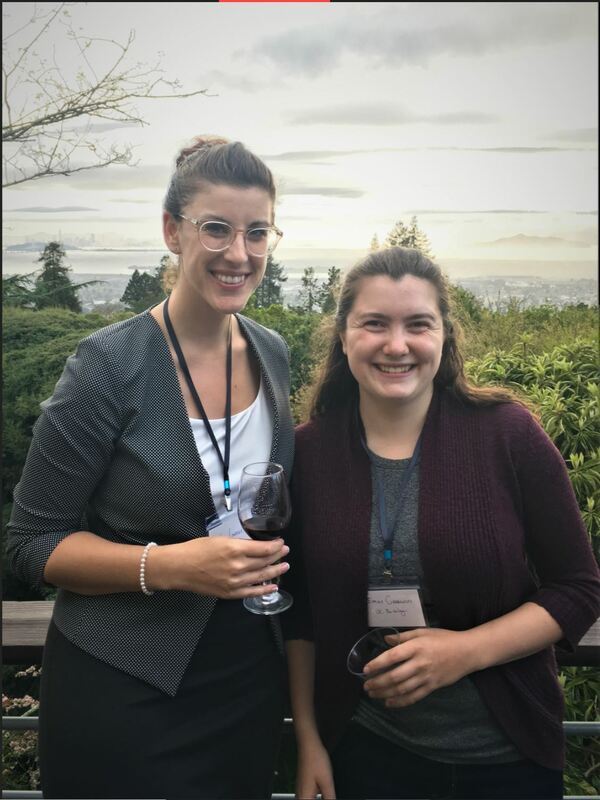
I had a lovely time at PHREND (PHonology Research weekEND) 2019, which was held at UC Berkeley this year. I presented the briefest of snapshots of my dissertation work and enjoyed hearing more about the development of Q Theory in Panãra (Myriam Lapierre, Martha Schwarz, Karee Garvin, Sharon Inkelas) and catching up with Emily Grabowski and learning about tone in Coatlán-Loxicha Zapotec. Cherry on the top of this conference was catching a beautiful sunset over the city and both bay bridges from Larry Hyman's gorgeous home in the Berkeley hills. 
Ghost elements in Ende phonology
Kate L. Lindsey (Stanford University)
Ende phonology exhibits several phenomena where partially underspecified segments seem to appear and disappear at the service of phonotactics, much like yers in Slavic. Following Zoll (1996) and Kiparsky (2003), I call such elements ghosts. I will present two types of ghosts in Ende and show how the interaction of these two patterns informs formal theories on the representation of underspecification in the input.
Ende floating nasals demonstrate alignment of an underspecified nasal segment to the leftmost non-initial obstruent in the word, much like how stress and affixes may be aligned to left or right edges of stems or feet (McCarthy & Prince 1993) or how tone patterns may spread to adjacent tone-bearing units. A phonotactic analysis of the Ende dictionary and corpus reveals that prenasalization is a contrastive feature of morphemes, much like nasalization in Máíhɨ̃ki (Sylak-Glassman 2013). Ende phonotactic reduplication displays semantically vacuous copying of segmental structure to repair verb roots that violate a phonotactic constraint on word minimality. Monosyllabic verb roots reduplicate in isolated forms, but multisyllabic verb roots do not. Curiously, morphological structure also seems to play a role.
            Representing both ghost elements as subsegments in the input allows for straightforward constraint-based analyses of the phenomena independently. However, when the two ghost patterns co-occur in the same word, a ranking paradox arises. This puzzle is solved if the two types of ghost elements are represented distinctly in the input.

Talk: ​Is Ende reduplication phonological copying or morphological doubling? ​@ UC Berkeley's Phonetics and Phonology Forum

3/18/2019

 
​Is Ende reduplication phonological copying or morphological doubling?
Ende infinitival verbs are an interesting puzzle for the Dual Theory of reduplication (Inkelas 2008), which distinguishes phonological and morphological doubling as formally and functionally distinct phenomena. In Ende, infinitival reduplication is sensitive to phonological structure (monosyllabic verb roots reduplicate, multisyllabic verb roots do not reduplicate) and to morphological structure (monomorphemic verb roots reduplicate, multimorphemic verb roots do not). The shape of the reduplicant may be phonologically-determined (CV template, TETU patterns) or morphologically-determined (total reduplication, no TETU patterns). In this talk, I will contrast the two potential analyses, showing that neither a strictly phonological nor a strictly morphological analysis can account for all the data, and suggest an alternative mixed approach.
 
Inkelas, S. (2008). The dual theory of reduplication. Linguistics, 46, 351–402.
CLICK THIS POST TO SEE HANDOUT

Talk: Do retroflex obstruents show variable affrication in Ende? @ Stanford's Sociolunch

2/13/2019

 
Excited to discuss new collaborative work with Katherine Strong and Katie Drager (UH Manoa) on sociolinguistic variation in Ende retroflex affrication at Stanford's weekly Sociolunch.

In the News: Paradise Magazine

1/26/2019

 
It was a fun experience to be interviewed for an in-flight magazine after reading so many of them over the years! This article came out in their January-February edition on all Air Niugini flights. 

Read More

Poster: Variation and spreading in Pahoturi River final-/n/ realization @ LSA 2019

1/4/2019

 
Abstract summary: Following Schokkin's (2018) work on linguistic and age effects on final /n/-realization in Idi verbs, this paper presents a matched study of the same variation in related Ende. The findings show that the pattern is not as simple as /n/-elision or /n/-addition, but rather that the youngest and oldest speakers are eliding /n/ (e.g. da instead of dan) and young women are adding /n/ (e.g. danən instead of dan). This work expands what is known about the Pahoturi River language family and contributes to the study of sociolingusitic variation in minority languages.

Read More

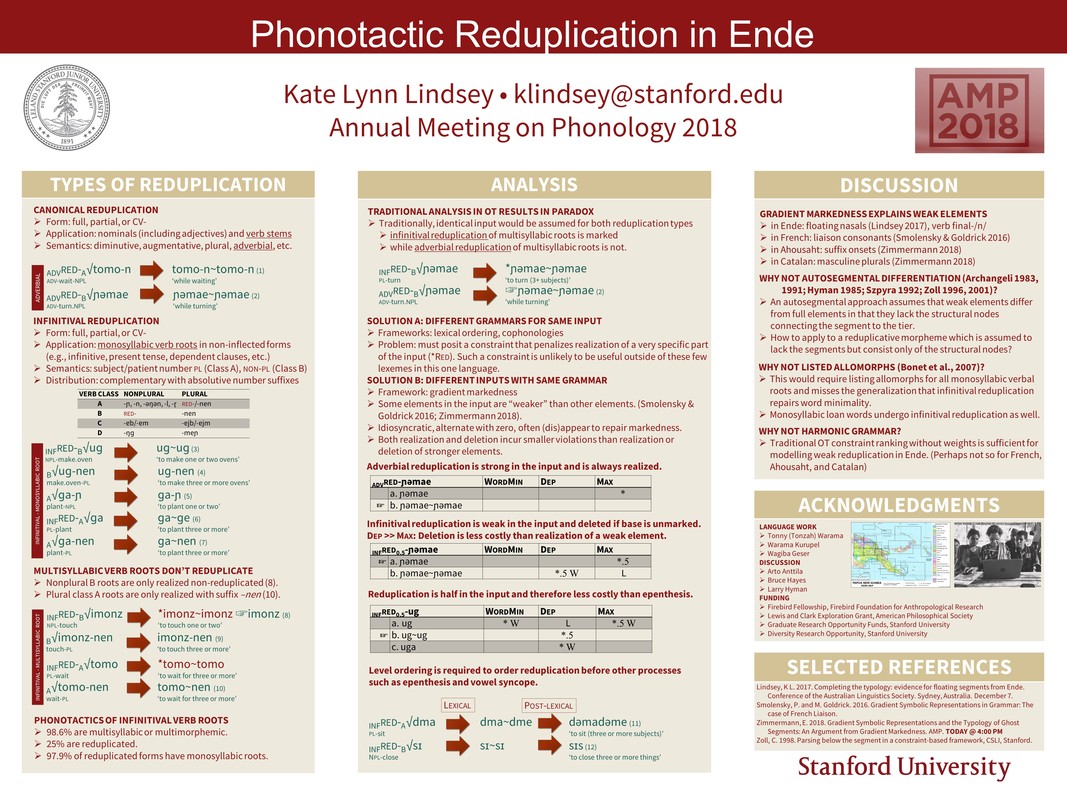
Poster: Phonotactic Reduplication in Ende

10/6/2018

 
Picture
Had a great experience presenting my data on Phonotactic Reduplication in Ende at the Annual Meeting on Phonology in San Diego! I was happy to have such an engaged audience during my poster session, which I think will really improve how this work fits into my dissertation.

Grant: Firebird Fellowship

3/13/2018

 
I am overcome with gratitude - the Ende Language Project has been awarded the generous Firebird Fellowship for the fourth year in a row! This year’s project: Passing On Knowledge - a seven week technology workshop training youth in Limol how to use video cameras and computers to make short films about their grandparents and ancestors. We wouldn’t have been funded if not for the amazing work done first by Grace, Diana, Elizabeth, Catherine, Gwynn, and Lauren. Cheers to you all and may this project open up doors to knowledge and opportunity for everyone in Limol.

Fieldwork: Limol, Papua New Guinea (Trip #4)

2/25/2018

 
All smiles after 10 weeks of language work! I had intended on staying in Limol through June but I had some computer troubles and made the decision to come out to Canberra for a month and stay in through July instead. The fieldtrip was another wild success. Although I was alone this trip, I was still able to double the size of the spoken corpus by conducting 62 sociolinguistic interviews. I made a lot of progress on the grammar and phonology and trained Warama and Tonny how to transcribe with the computer.

Book: Ende Dictionary #3

12/17/2017

 
Third version of the Ende dictionary printed and bound today! More names and faces on this year’s cover and most importantly way more words inside!

Talk: Diachronic typology meets contact typology - a regional case study from Southern New Guinea (ALT 12)

12/15/2017

 
Picture
What an exciting talk to give with Nick Evans, Dineke Schokkin, Eri Kashima, Mark Ellison, Kyla Quinn, and Jeff Siegel! Together, we presented some discussions on the following questions: Do different levels of linguistic structure change at different rates? and Are those levels affected differently in language contact? Nick introduced a new word ​vergence ​to talk about convergence, divergence, and nonvergence among the languages in Southern New Guinea. We presented and compared phonemic, lexical, kinship, and morphological data across the region. As you can see in the photo above - it was a popular talk!

Talk: Completing the Typology - Evidence for Floating Segments from Ende (ALS 50)

12/7/2017

 
Picture
So happy to give a talk on Ende phonology at the Australian Linguistics Society's 50th annual conference! The talk went really well and I got to showcase a lot of new data from my 2017 fieldtrip. This will be the fourth chapter of my dissertation. The abstract and slides are included below

Fieldwork: Limol, Papua New Guinea (Trip #3)

11/20/2017

 
Picture
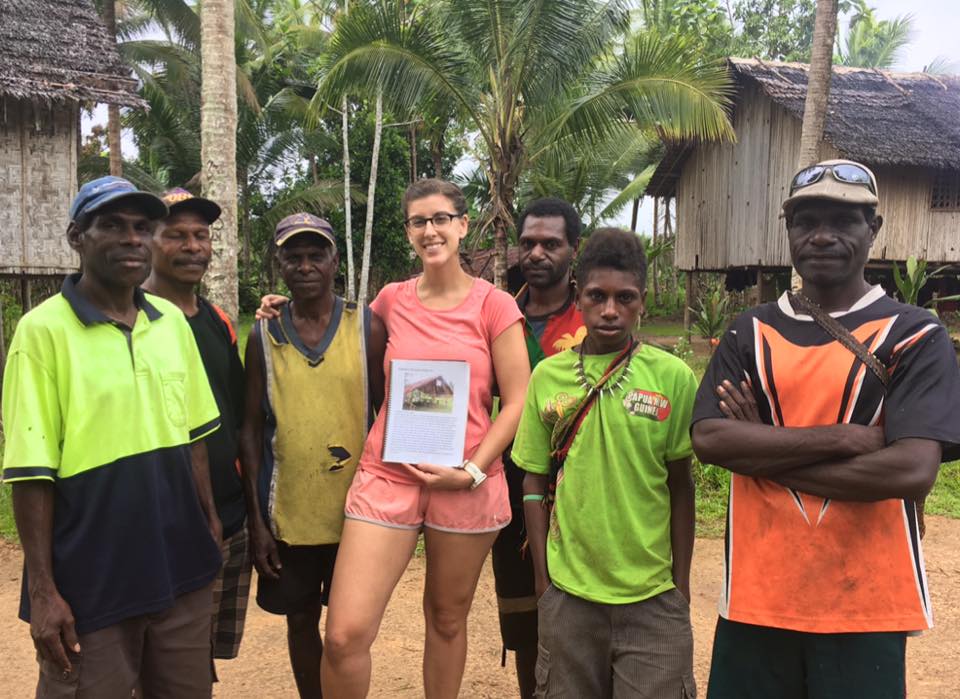
Another enormously successful field trip to Limol in the books. I learned so much, not just about the language, but about what it means to be kind, generous, and selfless, Ende qualities that abound in KT village. This picture is of me and "the boys" who make this crazy dictionary/grammar/corpus thing happen! Jeff, Joshua, Warama, Tonny, and Jerry far right. Couldn't do what I do without their hard work and awesome attitudes!​

Travel: SF-Australia

9/22/2017

 
Picture
Today, I take off for beautiful Australia for a year of fieldwork and collaboration at the Australian National University! It was a tough decision to take a year "off" and leave home but I know that I need this year to understand the Ende language well enough to do it justice in my dissertation.

Book: The Ende Alphabet Book

9/1/2017

 
Picture
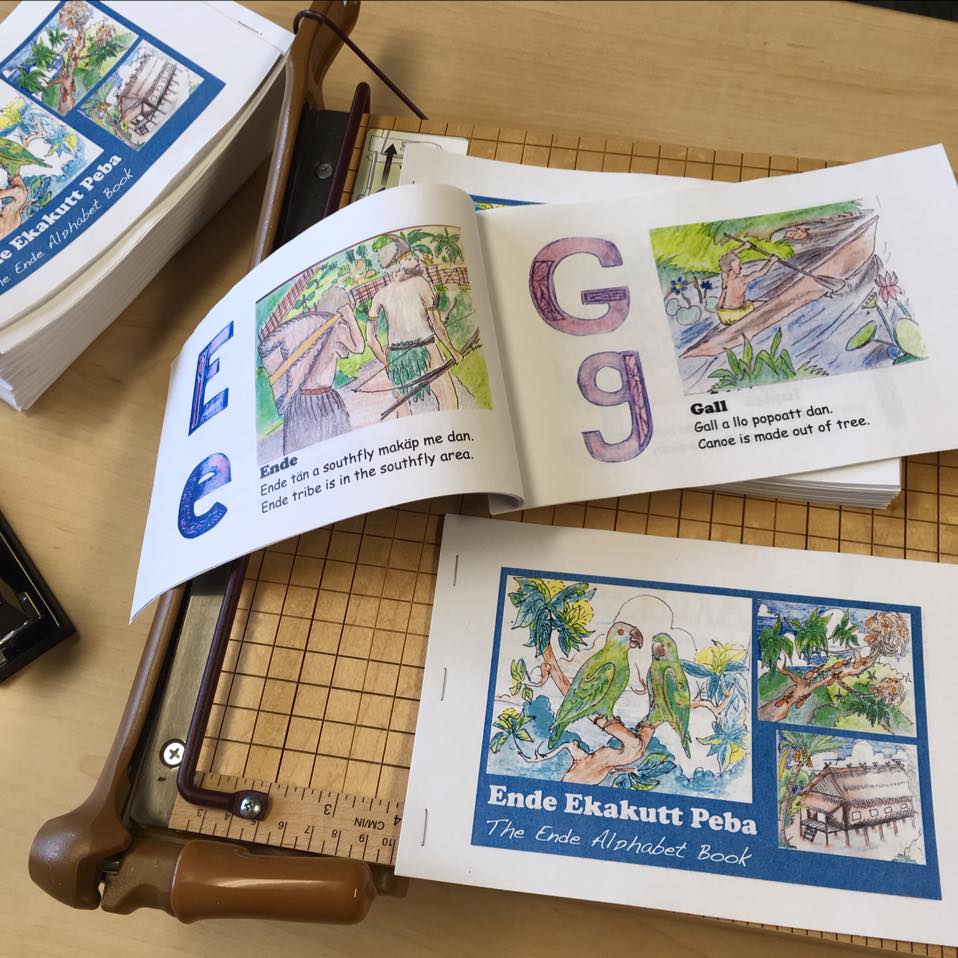
 First printing of the Ende Alphabet Book! Lovingly designed by Diana Johnson, Sam Karao, and Sam Kurupel in Limol in 2016. I'm printing 40 for the Limol Elementary School.

Grant: Lewis and Clark Fund for Exploration and Field Research

5/20/2017

 
Picture
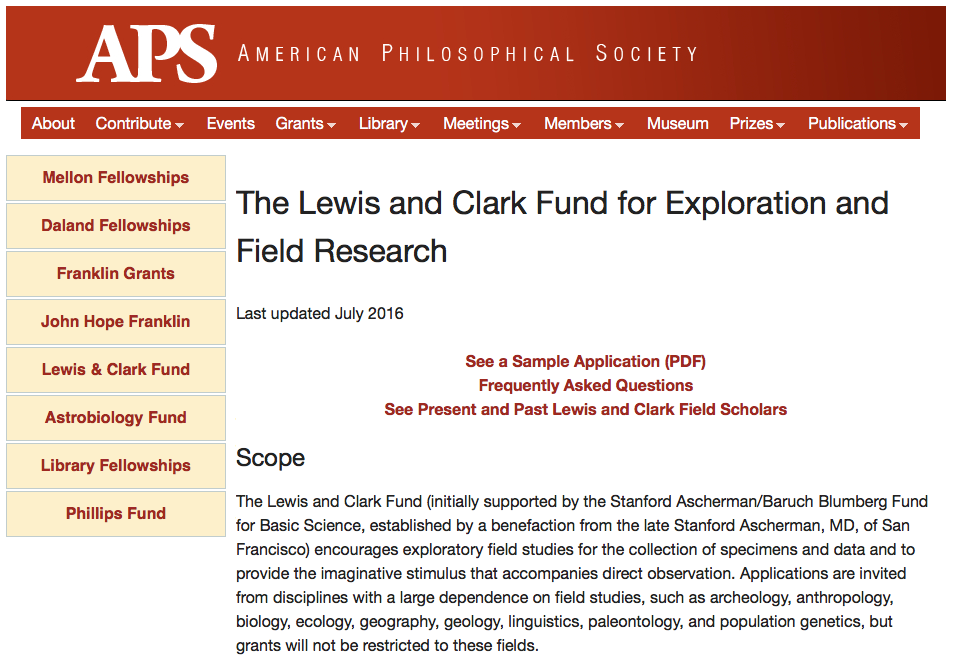
​I am very happy to report that I have been awarded support from the Lewis and Clark Fund for Exploration and Field Research. They have accepted my proposal to collect and annotate the Ende spoken corpus and expand the Ende dictionary and grammar. Their support will go directly toward this important documentation task that has been requested directly by the Ende speaking community. I feel very honored to have their support and look forward to sharing this with Limol. 

Talk: Verbal Reduplication in Ende (NoW Phon 3)

5/19/2017

 
Picture
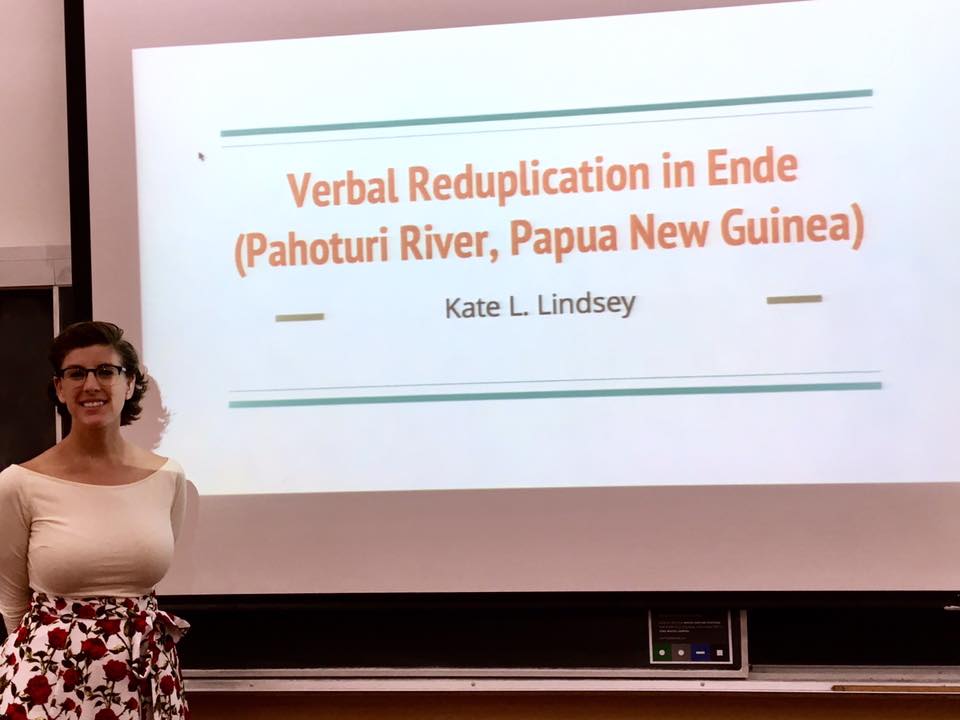
On May 19th, I gave a talk titled “Verbal Reduplication in Ende” at the 3rd annual Northwest Phonetics and Phonology Conference. The data presented in this talk were collected in 2015 and 2016 and the proposed analysis for the three reduplication patterns is part of my dissertation proposal. I got some great feedback and stayed with my friend Oksana, whom I met in 2011 at the LSA Institute in Boulder. I’ve attached the slides below.

Grant: Stanford VPGE Diversity Dissertation Research Opportunity grant

5/17/2017

 
Picture
​Today, I received the wonderful news that my proposal to continue research on the phonology and morphology of the Ende verb was accepted by the Stanford Vice Provost for Education Diversity Dissertaiton Research Opportunity fund. This grant will support travel and equipment fees related to my dissertation.

Grant: Stanford Graduate Research Opportunity

5/15/2017

 
Picture
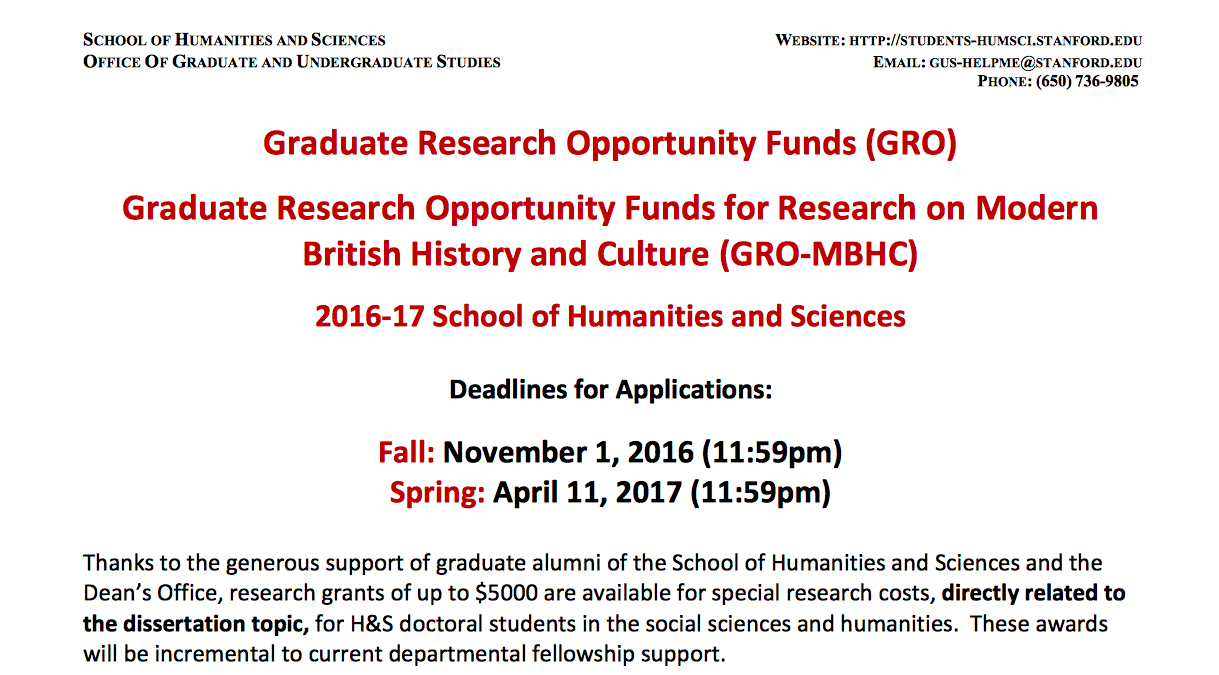
​I learned today that the Stanford Graduate Research Opportunity fund accepted my proposal to continue field research on the phonology and morphology of the Ende verb. Their generous support will support travel and equipment fees related to my dissertation.

Accomplishment: Wine Country Century and Light for Limol

5/6/2017

 
Picture
​On May 6, I completed my first 100-mile bike ride - the Wine Country Century - to raise awareness for my Light for Limol campaign. During the month of April, I shared videos and stories about life in Limol, where solar powered lanterns and water rollers will make a big difference in the lives of Ende speakers. My goal was to raise $1000 to bring 2 water rollers and 40 solar lanterns - one lantern for every house in Limol. My friends and family went above and beyond to support me and as of May 6, we raised $2025 for Limol! This money will go to 4 water rollers and 80 solar lanterns, which will be shared between the villages of Limol and Malam.

<<Previous

    Author

    Kate Lynn Lindsey

    Archives

    March 2022
    January 2022
    December 2021
    November 2021
    October 2021
    September 2021
    June 2021
    May 2021
    April 2021
    March 2021
    February 2021
    December 2020
    November 2020
    September 2020
    July 2020
    June 2020
    February 2020
    January 2020
    December 2019
    October 2019
    September 2019
    August 2019
    July 2019
    June 2019
    May 2019
    April 2019
    March 2019
    February 2019
    January 2019
    November 2018
    October 2018
    August 2018
    July 2018
    March 2018
    February 2018
    December 2017
    November 2017
    September 2017
    August 2017
    June 2017
    May 2017
    April 2017
    February 2017
    January 2017
    September 2016
    July 2016
    June 2016
    April 2016
    March 2016
    December 2015
    November 2015
    October 2015
    September 2015
    July 2015
    June 2015
    May 2015
    April 2015
    March 2015
    February 2015
    January 2015
    August 2014
    July 2014

    Categories

    All
    Accomplishment
    Aid
    ALS
    American University
    ANU
    Appointment
    Article
    Australia
    Award
    Beach
    Bike
    Book
    Bookstores
    Boston
    Boston University
    California
    Canada
    Canberra
    Certification
    Chuvash
    Collaboration
    Colorado
    Community
    Conference
    Croatia
    DC
    Defense
    Development
    Dictionary
    Dissertation
    Ende
    Estonia
    Europe
    Family
    Fieldwork
    Film
    Finland
    Firebird
    First Aid
    Florida
    Ghost Elements
    Graduation
    Grammar
    Grant
    Greece
    Hawaii
    Idi
    Illinois
    Indigenous Language
    Invitation
    Invited Talk
    Iowa
    Italy
    Job
    Junior Faculty
    Kinship
    Language Acquisition
    Language Endangerment
    Limol
    Literacy
    LSA
    Magazine
    Melbourne
    Mentorship
    Methods
    Morphology
    Nebraska
    Nevada
    News
    NWAV
    Oral Literature
    Oregon
    Pahoturi River
    Papuan
    Papua New Guinea
    Phonology
    P-Interest
    Portland
    Poster
    Presentation
    Proposal
    Publication
    Qualifying Paper
    Reduplication
    Research
    Road Trip
    San Diego
    Seattle
    Slides
    Sociolinguistics
    Solar
    Southern New Guinea
    Stanford
    Storytelling
    Syntax
    Talk
    Teaching
    Technology
    Train
    Travel
    Triathlon
    Turkish
    Typology
    UC Berkeley
    UH Manoa
    University Of Melbourne
    University Of Oregon
    Utah
    Variation
    Visiting Scholar
    Washington
    Word Order
    Workshop

    RSS Feed

Powered by Create your own unique website with customizable templates.
Photos from Rick Obst, Joe Passe